



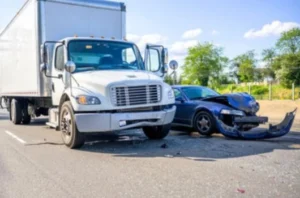
When a commercial truck crashes into a passenger vehicle, the consequences are often catastrophic. Attorney Skiber understands the devastating impact these accidents have on Connecticut families. Our truck accident team immediately launches a thorough investigation, preserving critical evidence like black box data and driver logs before they disappear.
Attorney Skiber brings specialized knowledge of state and federal trucking regulations to your case. We know how to hold both negligent drivers and trucking companies accountable. From securing electronic data to analyzing maintenance records, we use every tool available to build your case.
Trust our local expertise to:
- Send immediate preservation letters to protect crucial evidence
- Access and analyze black box data and driver logs
- Investigate potential violations of federal trucking regulations
- Identify all responsible parties – from drivers to trucking companies
- Fight against well-funded corporate legal teams
Don’t let trucking companies pressure you after an accident. Get Attorney Skiber’s experienced team working for you immediately.
Understanding Truck Accident Claims in Connecticut
Due to a passenger vehicle’s smaller weight and size, occupants of these vehicles may be more vulnerable to suffering severe injuries when they collide with a large tractor-trailer. If you or a loved one was injured in a tractor trailer wreck, contact a Norwalk, Bridgeport, & Stamford truck accident lawyer for legal advice.
Consulting a personal injury attorney could prove to be beneficial because truck accident claims can be more complex than other personal injury claims. This is primarily because the commercial trucking industry is subject to various laws and regulations that may not be at issue in other types of motor vehicle collisions. For help on your case, reach out to a skilled legal representative.

for Connecticut GET A FREE CONSULTATION
Laws and Regulations For Trucking Companies
State and federal laws govern commercial trucks, truck operators, and trucking companies. The Federal Motor Carrier Safety Administration and the Connecticut Department of Motor Vehicles implement and enforce specific rules that relate to commercial drivers and the trucking industry. For instance, commercial truck operators must have the proper credentials to obtain a commercial driver’s license (CDL).
These regulations also set a designated number of hours that truckers are allowed to drive as well as their documentation requirements. Other provisions establish maximum weight restrictions and quality control measures, such as when a trucking company must schedule repairs, maintenance, and inspections.
The deadline to file in Connecticut
Connecticut law generally gives you two years from the date the injury is sustained or discovered to bring a claim, and in most cases no more than three years from the act or omission complained of, even if the injury is discovered later. That deadline comes from Conn. Gen. Stat. § 52-584.
Frequently Asked Questions
Why are truck accident claims in Connecticut more complex than other personal injury claims?
Truck accident claims can be more complex than other personal injury claims because the commercial trucking industry is subject to various laws and regulations that may not be at issue in other types of motor vehicle collisions.
What laws and regulations govern commercial trucks and trucking companies in Connecticut?
State and federal laws govern commercial trucks, truck operators, and trucking companies. The Federal Motor Carrier Safety Administration and the Connecticut Department of Motor Vehicles implement and enforce rules related to commercial drivers and the trucking industry, including CDL credential requirements, limits on hours drivers are allowed to drive and documentation requirements, maximum weight restrictions, and quality control measures such as when repairs, maintenance, and inspections must be scheduled.
Who can be held liable for a semi-truck accident?
If a trucker acted negligently and caused an accident, an injured person may have a claim against the driver. If the trucker acted negligently during the scope of employment, the employer also may be liable under vicarious liability. A trucking company may be liable for issues such as driver inexperience, lack of supervision, and failure to appropriately hire and train drivers. Truck manufacturers may also share liability if a defective part led to a trucking accident.
How does comparative negligence work in Connecticut truck accident cases?
Connecticut General Statutes §52-572h establishes a modified comparative negligence system. If an injured victim is less than 51 percent at fault, they may still receive compensation from the defendant. If a judge finds a plaintiff partially responsible, the award may be reduced in proportion to the amount of fault shared.
What is tractor-trailer black box data and why is it important to preserve it?
There is so-called blackbox information stored in every tractor trailer that measures speed, braking frequency, turning, and acceleration data. An attorney can send a preservation letter to the offending truck company to preserve this information that is needed to prove liability.
Negligence and Liability in Semi-Truck Accidents
When truck operators drive negligently and cause an accident, anyone who suffers injuries as a result may have a claim for compensation against them. If the trucker acted negligently during the scope of their employment, then the employer also may be liable. Under vicarious liability, employers may be responsible for the negligence of their workers when they are performing work-related duties.
Although various kinds of negligence can contribute to truck accidents, some common examples include:
- Distracted driving
- Impairment by drugs or alcohol
- Fatigued driving
- Speeding or other traffic violations
Driver inexperience, lack of supervision by the employer, and failure to appropriately hire and train drivers also may be factors that contribute to a trucking company being liable after an accident. Truck manufacturers may also share liability if a defective part led to a trucking accident. A Norwalk, Bridgeport, & Stamford truck accident attorney could assess an accident victim’s claim and determine which parties may be liable to pay damages.
Traffic Safety Administration (NHTSA) has powerful tools that require offending trucking companies to preserve and produce trucking information. There is so-called blackbox information stored in every tractor trailer that measures speed, braking frequency, turning and acceleration data. An attorney can send preservation letter to the offending truck company to preserve this information under NHTSA that is needed to prove liability.

Comparative Negligence in Truck Wrecks
Depending on the circumstances, injured drivers may share some liability for their accident. Connecticut General Statutes §52-572h establishes the modified comparative negligence system, which states that if injured victims are less than 51 percent at fault for their accident, they may still receive compensation for their damages from the defendant. A victim whose share of fault is more than 50 percent may not recover at all.
However, if a judge finds a plaintiff partially responsible for their injuries, they may reduce the injured party’s award in proportion to the amount of fault they shared in their accident. Because determining liability can be a complicated matter, a Norwalk, Bridgeport, & Stamford truck wreck lawyer should review an injured party’s case to evaluate how much they may receive in damages based on the role they played in their injuries.
for Connecticut GET A FREE CONSULTATION
Call a Norwalk, Bridgeport, & Stamford Truck Accident Attorney for Help
When you are trying to focus on your physical and emotional recovery, dealing with the legal process can be tough. A truck accident lawyer could provide you with assistance in handling these crucial legal matters. Call to schedule your free case consultation and get started on your claim today.